





Email: sergei@russianhunting.com
Location: Asacha, Kamchatka peninsula
Season dates: April 22 – May 25
Hunting method: Spot and stock from snowmobiles
Accommodations: Remote cabin with electric generator, satellite phone, sauna, indoor plumbing
Price: $16,000
Additional trophies: brown bear $4000
Reception and assistance in Petropavlovsk airport; Accommodation in the hunting area; Meals and soft drinks during the hunt; Transportation during the hunt; Services of 1 guide per hunter; Services of 1 interpreter in a camp; Field trophy preparation; Gun permit; Invitation letter and voucher; Hunting license; 1 bear.
Insurance of any kind; International and domestic airfare; Hotel in Petropavlovsk before or after the hunt; SITES permit; Conservation, shipping or transporting trophies from Russia; Cost of sightseeing tours; Gratuities.
Day 1: arrival to Petropavlovsk, overnight in Petropavlovsk.
Day 2: 4 то 6-hour car transfer to the hunting camp
Day 3-8: 6 days of hunting
Day 9: return flight to Petropavlovsk, overnight in Petropavlovsk
Day 10: flight home
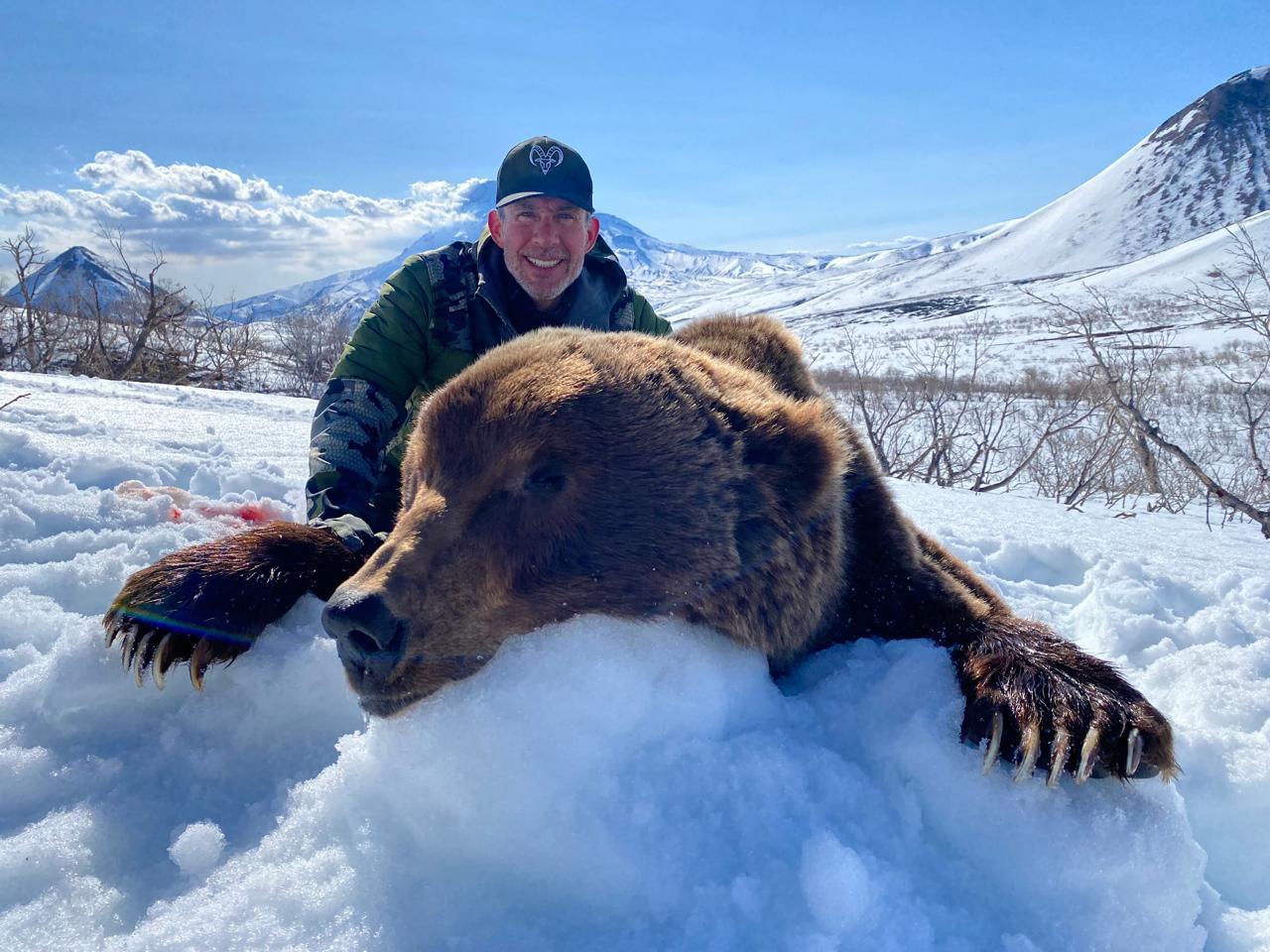
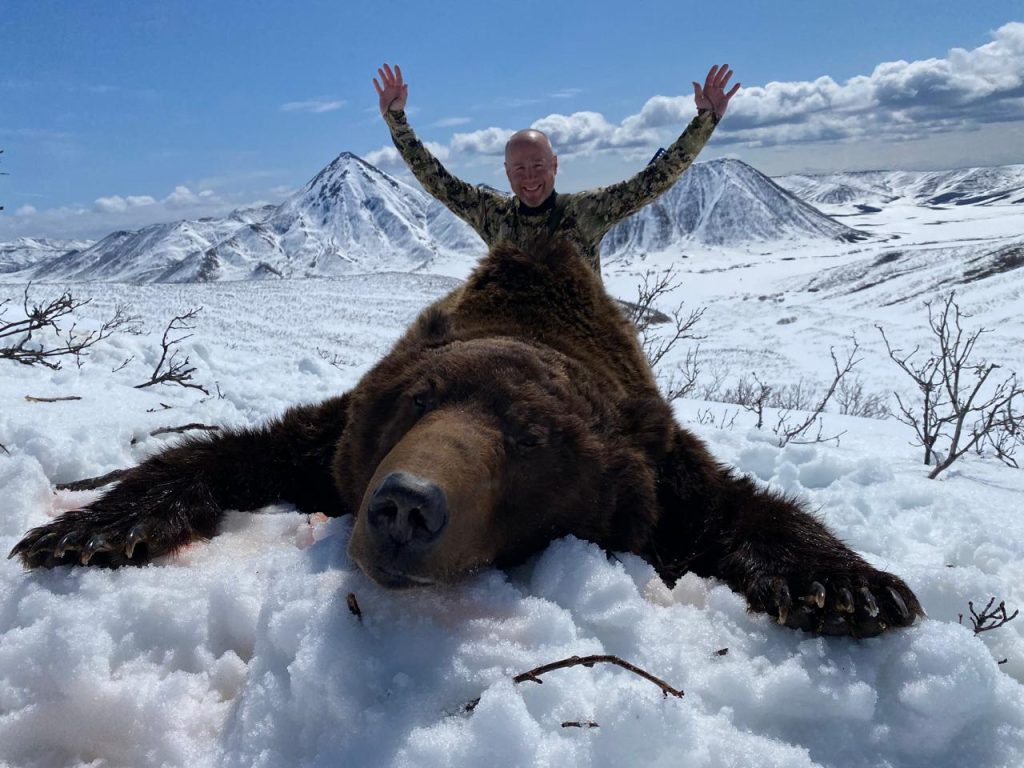
The Kamchatka peninsula has the largest population of big salmon eating bears and currently holds the world record. The average trophy size taken during the spring season is over 9 ft. square. Spring hunts take place when bears emerge from hibernation, with the snow is still present on the ground, which aids in locating best trophies. The daytime temperature range is from -10 C to +5C in the spring (+20F to +40F). Shooting distance is within 200 yards. Hunters should bring white camo suits, warm clothes, sun glasses and sleeping bags. The success rate is close to 100%. Hunters usually have an opportunity to take more than one bear
